

You have a blank wall and a good idea. What you need now is the right placement. Floating shelves are one of the most flexible storage and display solutions available because there is no bulky furniture footprint and no visible brackets, just clean lines and whatever you choose to put on them. The trick is knowing where to put them, how high, and what to display or store.
This guide covers floating shelf placement ideas for every room in your house, along with the installation basics that help shelves stay secure and look balanced.
Once you find a placement idea you like, measure the wall and plan the spacing before installing. Most stacked floating shelves need about 10 to 18 inches between shelves, but kitchens, bathrooms, bedrooms, and living rooms each have different clearance needs. For exact measurements, see our guide on how far apart floating shelves should be.
Shop Floating Shelves for Every Room of Your Home
Jump to: Shelf Layouts | Entryways | Living Rooms | Dining Rooms | Kitchens | Bedrooms | Bathrooms
What Is a Floating Shelf, and How Does It Stay Up?
A floating shelf is mounted to the wall using a concealed bracket system, steel plate, or rod assembly hidden inside the shelf itself. From the front, there is no visible support. That clean look is exactly the point.
The strength comes from the bracket, the shelf construction, and, most critically, the studs. For the best support, follow the installation instructions for your specific shelf and anchor into wall studs whenever possible. Drywall anchors alone may only be appropriate for very light decorative use.
Shelf depth also matters. The deeper the shelf, the more leverage it places on the support system. If you plan to display dishes, books, plants, or other heavier items, choose shelf depth and installation hardware carefully.
Before You Install: The Basics That Determine Everything
Find your studs first. Use a stud finder, or knock along the wall and listen for the change in density. Studs are typically spaced 16 inches apart, though some homes use 24-inch spacing. Electrical boxes and windows are often flanked by studs and can be a useful starting point.
Anchor into studs whenever possible. Drywall anchors alone are not ideal for loaded shelves. If the support holes do not line up with your studs, follow the shelf manufacturer's instructions for the safest installation approach.
Consider blocking. If you are doing a renovation or new build, ask your contractor about adding horizontal blocking between studs before the drywall goes up. This can make future shelf installation stronger and more flexible.
Plan height and spacing before drilling. Use painter's tape to mark the shelf positions on the wall. This helps you check the spacing, height, and visual balance before making holes.
How to Arrange Floating Shelves by Quantity
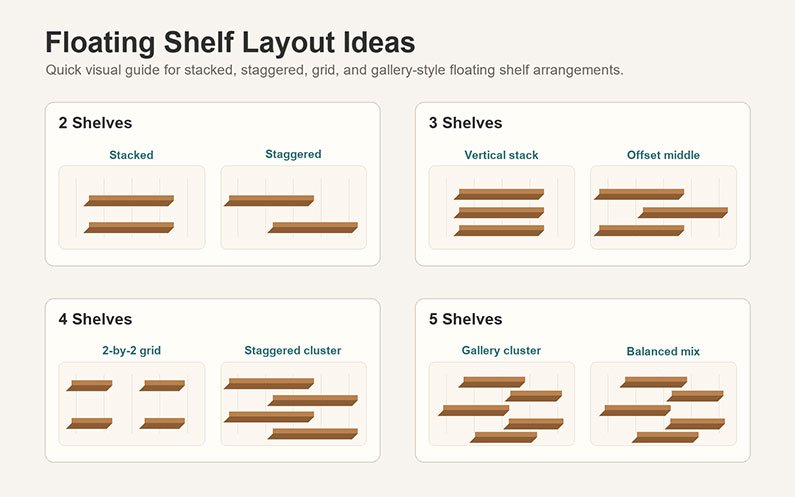
Once you know which wall you want to use, decide whether the shelves should look straight, staggered, or grouped. A straight layout feels clean and symmetrical, while staggered floating shelves create more movement on a blank wall. The right choice depends on the wall width, nearby furniture, and how many shelves you plan to install.
2 Floating Shelves
For two shelves, use a simple stacked layout or a light stagger. A stacked layout works well above a toilet, beside a mirror, over a desk, or on a narrow wall. A staggered layout works better on a wider wall where one shelf can sit slightly higher and to the side of the other.
3 Floating Shelves
Three floating shelves are one of the easiest arrangements to balance. Stack all three vertically for a clean look, or offset the middle shelf to create a subtle staggered pattern. This works especially well in living rooms, bedrooms, offices, and entryways.
4 Floating Shelves
Four shelves can be arranged as a 2-by-2 grid, a vertical stack, or an asymmetrical cluster. A grid feels orderly and built-in, while a staggered arrangement feels more casual and decorative. If the shelves will hold dishes, books, or heavier items, plan the layout around studs first and adjust the visual spacing from there.
5 or More Floating Shelves
Five or more shelves can create a gallery-wall effect, but they need enough breathing room to avoid looking crowded. Mix shelf lengths carefully, keep related shelves visually grouped, and use consistent spacing where possible. Before drilling, mark every shelf with painter's tape so you can see the full arrangement on the wall.
For detailed measurement guidance, use our floating shelf spacing guide. If you are still choosing shelf size, check our guide to floating shelf depth.
Floating Shelf Placement in Entryways
Entryways are often left bare, even though they are one of the most useful places for a shelf. Floating shelves can keep this area cleaner and more organized or simply make it feel more welcoming.
Some floating shelf placement ideas for your home's entryway include:

1. Under a Mirror
Have a mirror in your entryway? Placing a floating shelf right below it can add function and style. Use it for keys, mail, small grooming items, a candle, or a small vase.
2. Near the Door
If you do not have a mirror but still want a practical landing spot, place a floating shelf near the door. A small plant, a framed photo, or a catchall dish can make the entry feel more finished.
3. A Shelf with Hooks
If you want extra organization, a shelf with hooks underneath can hold coats, keys, handbags, umbrellas, hats, and similar items. Choose a shelf and mounting approach suited to the weight of anything that will hang from it.
Floating Shelf Placement in Living Rooms
Living rooms are one of the most common places to install floating shelves. They help create storage and display space without the weight of a large bookcase or entertainment center.
This can be achieved with the following strategies:

4. Behind the Couch
One of the most natural places for a floating shelf in the living room is behind the couch. Leave enough space above the couch so the shelf does not feel crowded or easy to bump. For more measurements, see our guide to floating shelf height and spacing.
5. Create a Picture Gallery
If you have a big blank wall in your living room, a tasteful way to decorate it is with several floating shelves adorned with family photos, small artwork, and favorite objects.
Because the shelves hold the frames, you can refresh the display without hanging each picture individually. For styling help, see our tips for decorating floating shelves.
6. Build a Library
If you do not have enough books to justify a full bookcase, floating shelves can be an excellent alternative. Choose deeper shelves for books, and make sure the installation is suited to the load.
7. Replace the Entertainment Center
The days of wall-covering, bulky entertainment centers are long over. Framing a television with floating shelves can be a cleaner, more streamlined option.

Depending on your style, you can hang two to four shelves on each side of the television, mount one or two shelves above the television, or place shelves around the television for a balanced built-in look.
Floating Shelf Placement in Dining Rooms
Not every dining room has space for a large cabinet or hutch. Floating shelves can add display and storage space while keeping the room open.
Some ideas for utilizing floating shelves in a dining room include:
8. Storage for Table Decor
If you like to dress up your dining room table, use floating shelves to house candles, candlesticks, glasses, small baskets, decorative plates, pitchers, or bowls.
9. House Conversation Pieces
Dining rooms are natural gathering spaces. Floating shelves can display artwork, antiques, family heirlooms, travel finds, and other pieces that help the room feel personal.
Floating Shelf Placement in Kitchens

For many families, the kitchen is the central hub of household activity. Floating shelves can make a kitchen more useful and more charming, especially when paired with high-style hardware, faucets, lighting, or other finishing details.
Some ways homeowners can create a more utilitarian and charming kitchen include:
10. Build a Coffee Bar
For many people, the morning does not start without coffee. A floating shelf above a coffee maker or espresso machine can keep mugs, sweeteners, and other coffee essentials close by.
11. Install Corner Shelves
Kitchen corners are often either empty or used for rarely needed items. Triangle-shaped or corner floating shelves can turn those awkward spaces into useful display or storage areas.
12. Create a Dish Display
One of the most popular uses of floating shelves in the kitchen is to create a dish display. Shelves can hold plates, bowls, cups, jars, and serving pieces while freeing up cabinet space.
If you plan to store dishes, check your shelf depth before installing. Our guide on how deep floating shelves should be can help you choose the right size.
Shop Floating Shelves for Kitchens, Living Rooms, Bedrooms, and More
Floating Shelf Placement in Bedrooms
Bedrooms are primarily used for sleeping, but that does not mean they should lack storage or style. Floating shelves can make a bedroom feel more complete without taking up floor space.
Some ways you can use floating shelves to upgrade your bedroom include:

13. Install Floating Nightstands
Since floating shelves come in many sizes, you can choose shelves that work as compact nightstands. This is especially useful in smaller bedrooms where a traditional nightstand may feel too bulky.
14. Over the Bed
If you do not have space for shelves beside the bed, place a larger floating shelf above the bed. Hang it high enough that it does not feel intrusive and does not interfere with sitting up or making the bed.
15. Put Up Corner Shelves
Just as floating shelves can make a kitchen corner more useful, they can do the same in a bedroom. Corner shelves work well for small plants, framed photos, and decorative accents.
16. Above a Desk or Work Area
Whether you work from home or use a bedroom desk for hobbies, floating shelves above the workspace can hold books, office supplies, and decor. Make sure the bottom shelf is high enough that it does not crowd the desk surface.
Floating Shelf Placement in Bathrooms
Bathrooms are usually one of the smallest rooms in a home, which makes thoughtful storage especially useful. Floating shelves can add storage without taking up floor space.
Bathroom-related floating shelf placement ideas include:

17. Above the Door
Maximizing storage space in small bathrooms is essential, which makes the area above the door useful. This space can hold towels, toilet paper, or decorative greenery.
18. Near the Mirror
Having everything you need within reach is helpful when getting ready in the morning. A floating shelf near the mirror can hold grooming items while keeping the countertop clearer.
19. Over the Toilet
A floating shelf above the toilet is a common way to store extra paper goods, towels, or small decorative pieces. Leave enough room to remove the toilet tank lid and reach items comfortably.
20. In the Shower
Shower racks can look temporary or cluttered. A corner shelf can create a cleaner place to hold shampoo, conditioner, and other essentials, but make sure the shelf material and installation method are appropriate for wet areas.
Floating Shelf Ideas for Every Room of the House
No matter which room you are considering upgrading, these floating shelf placement ideas can help you choose a location that adds style, storage, or both. Start with the room's function, check the available wall space, then plan shelf height, spacing, and depth before installing.
For the next step, review how far apart floating shelves should be, check how deep floating shelves should be, or browse floating shelves for the room you are updating.
Choose Floating Shelves for Your Room
Once you know where your shelves will go, choose a style, width, and depth that fits the room and the items you want to display. Browse floating shelves to find options for kitchens, living rooms, bedrooms, bathrooms, and entryways.
Image Credits
hidamarineko/Shutterstock.com
New Africa/Shutterstock.com
Chris Haver/Shutterstock.com
Hendrickson Photography/Shutterstock.com