
Wicker, Rattan, and Cane: What’s the Difference?

Learn Which Material Is Best for Your Renovation Project
Wicker refers both to a weaving technique and the finished woven material. It is typically crafted from natural plant materials like rattan, willow, bamboo, or cane.
Pre-woven rattan is typically made using cane, which is derived from the outer bark of the rattan plant. Here's a breakdown of the relationship between rattan, cane, and pre-woven rattan, we sum it all up in a table at the end for easy reference, too.
- Rattan refers to the whole plant, a climbing palm with flexible, durable stems.
- Cane is the outer bark of the rattan stem, which is stripped, processed, and often woven into patterns.
- Pre-woven Rattan (also called cane webbing) is a product created by weaving cane into specific patterns, such as hexagonal, basketweave, or herringbone.
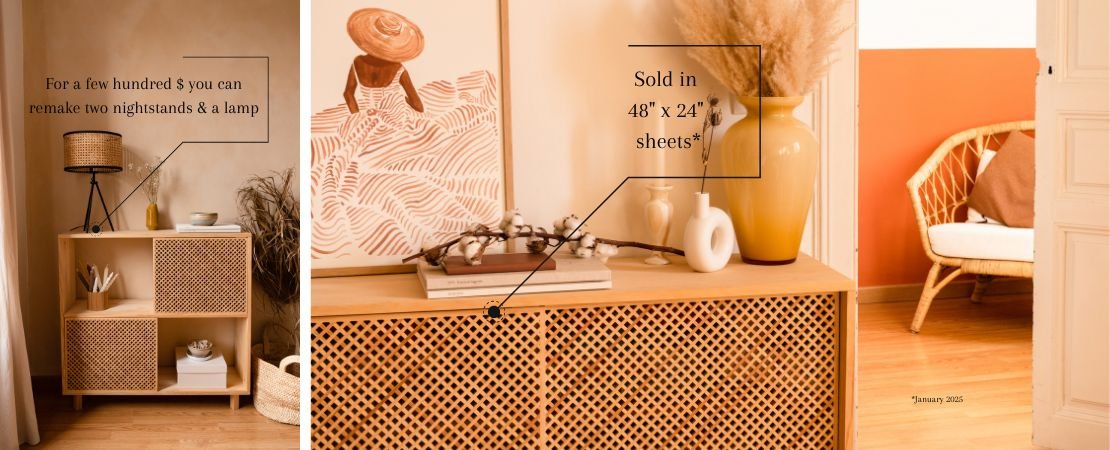
Pre-woven rattan is commonly sold in sheets and is widely used for projects like chair seats, cabinet inserts, and decorative panels. Its durability, flexibility, and natural aesthetic make it an excellent choice for furniture restoration and home improvement projects.
BUY RATTAN SHEETS AND CANE
Rattan, Bamboo, Wicker, and Cane: Which Material is Best for Your Next Home Renovation Project?
When planning a home renovation or furniture project, choosing the right material can make all the difference. Natural materials like rattan, bamboo, wicker, and cane are popular choices for their beauty, versatility, and sustainability. But what sets them apart, and which is the best option for your project? Let's compare.
What Are Rattan, Bamboo, Wicker, and Cane?
- Rattan
- Cane
- Wicker
- Bamboo
Source: Rattan is a climbing palm native to tropical regions, particularly Southeast Asia. It is harvested from the plant's solid, woody stems.
Key Features: Rattan is durable, flexible, and lightweight, making it ideal for furniture frames and woven details.
Best For: Furniture, cabinet insets, wall panels, and decorative accents.
Source: Cane is derived from the outer bark of the rattan plant. After the bark is stripped off, it is processed into thin strips or woven into intricate patterns.
Key Features: Cane is smooth, strong, and highly pliable. It is often used in weaving applications.
Best For: Chair seats, cabinet inserts, room dividers, and decorative panels.
Source: Wicker is not a material but a weaving technique. It can be made using rattan, cane, bamboo, or synthetic materials.
Key Features: Wicker is lightweight and visually appealing but depends on the material used for weaving.
Best For: Baskets, outdoor furniture, and decorative accents.
Source: Bamboo is a fast-growing grass that hardens into a sturdy, hollow structure. It is commonly used in construction, furniture, and flooring.
Key Features: Bamboo is rigid, sustainable, and has a distinctive look with visible nodes.
Best For: Flooring, structural furniture frames, and outdoor decor.
Comparing the Materials
Durability
Rattan: Highly durable and resistant to cracking or splintering, rattan is perfect for high-traffic areas and long-term use.
Cane: Strong but more delicate than rattan due to its thin structure. It excels in applications like chair seats and cabinet insets but needs care to prevent drying or splitting.
Bamboo: Very strong and rigid, bamboo is ideal for structural use but can crack under extreme pressure or if not properly treated.
Wicker: The durability of wicker depends on the material used for weaving. Natural wicker (made from rattan or bamboo) is less durable than synthetic options.
Winner: Rattan and bamboo for durability in structural applications; cane for detailed, decorative work.
Beauty and Appeal for Home Decor
Rattan: Known for its warm, natural color and smooth texture, rattan fits beautifully in both traditional and modern settings.
Cane: Offers a light, airy appearance with intricate weave patterns like hexagonal and basketweave. It adds elegance and texture.
Bamboo: Bamboo has a clean, natural aesthetic with visible nodes that make it distinct but less intricate than rattan or cane.
Wicker: Wicker's appeal lies in its texture and weaving style, making it highly versatile, but the material choice influences the final look.
Winner: Rattan and cane for their timeless and versatile beauty.
Sustainability
Rattan: Grows quickly and regenerates after harvesting, making it an eco-friendly choice.
Cane: As part of the rattan plant, cane shares the same sustainable qualities.
Bamboo: One of the fastest-growing plants, bamboo is a top choice for eco-conscious projects.
Wicker: Sustainability depends on the base material; natural wicker from rattan or bamboo is eco-friendly, but synthetic wicker is not.
Winner: Bamboo slightly edges out rattan and cane for sustainability due to its rapid growth and versatility.
Versatility
Rattan: Its flexibility makes it ideal for furniture, wall panels, and even structural accents.
Cane: Works best in small-scale or detailed projects like weaving and inserts.
Bamboo: Limited by its rigidity, bamboo is best for frames, flooring, and decor rather than intricate designs.
Wicker: Extremely versatile due to the technique's adaptability but reliant on the material's properties.
Winner: Rattan for all-around versatility; cane for decorative elements.
Ease of Use for DIY Projects
Rattan: Easy to work with once softened through steaming. It holds its shape well and is beginner-friendly.
Cane: Pliable when soaked, cane is perfect for intricate designs but requires some skill to weave effectively.
Bamboo: Challenging to cut and shape without specialized tools, bamboo is less DIY-friendly.
Wicker: Requires knowledge of weaving techniques but is manageable with the right material.
Winner: Rattan and cane are the easiest for DIY projects.
Best Material for Your Renovation Project
When choosing a material, consider your project's requirements.
For Furniture Frames: Rattan is the best choice due to its strength and flexibility. Bamboo is also suitable for structural pieces.
For Cabinet Inserts or Decorative Panels: Rattan excels in adding elegance and texture easily. Cane is a good option, too.
For Flooring or Structural Work: Bamboo offers strength and sustainability.
For Outdoor Furniture: Wicker made from synthetic materials provides weather resistance, but rattan can be used indoors for a natural look.
Why We Prefer Rattan and Cane
Rattan
Rattan stands out for its balance of durability, versatility, and ease of use. Whether you're crafting a custom furniture piece or refreshing your decor, rattan's natural charm enhances any space.
Cane
Cane is unparalleled for intricate designs and lightweight projects. Its ability to add texture and elegance to furniture, cabinets, and even lighting fixtures makes it a top choice for detailed work.
When thinking about the materials for your next home improvement or furniture renovation project, rattan and cane are versatile and vintage choices. They are ideal for a wide range of applications and relatively easy to install or weave. Use these natural materials to bring your vision to life when you're weaving a chair seat, designing a rattan headboard, or incorporating cane panels into your cabinets.
Comparing Rattan, Wicker, Cane, and Bamboo
| Category | Rattan | Bamboo | Wicker | Cane | Winner |
|---|---|---|---|---|---|
| Material Type | Climbing palm, solid, and flexible. | Hollow, fast-growing grass. | Weaving technique, not a material. | Outer bark of rattan plant. | N/A – All are distinct. |
| Durability | Very durable and long-lasting. | Strong but prone to cracking. | Varies based on base material. | Strong but thinner and more delicate. | Rattan |
| Flexibility | Highly pliable when steamed. | Rigid and less flexible. | Depends on material used. | Extremely pliable when soaked. | Cane |
| Aesthetic | Warm, natural texture and tone. | Smooth and distinctive with nodes. | Lightweight and textured. | Smooth with intricate patterns. | Rattan and Cane |
| Best Uses | Furniture, wall panels, decor. | Structural pieces, flooring. | Baskets, outdoor furniture. | Chair seats, cabinet inserts. | Rattan for versatility. |
| Design Styles | Rustic, boho, and modern styles. | Contemporary and minimalistic. | Depends on the weaving style. | Classic, elegant, and detailed. | Depends on project needs. |
| Sustainability | Grows quickly and regenerates. | Extremely sustainable. | Varies (natural materials = eco-friendly). | Shares rattan’s sustainability. | Bamboo slightly edges out. |
| Ease of Use for DIY | Beginner-friendly; easy to shape. | Difficult to cut and shape. | Requires weaving skills. | Best for smaller, intricate projects. | Rattan and Cane |
BUY RATTAN SHEETS AND CANE