
Distinguishing Victorian and Eastlake Styles

Distinguishing Victorian and Eastlake Styles
Victorian style is perhaps the most recognizable of all design styles — full of character, detail, and history. But within the Victorian period (1837–1901), several unique design movements emerged, each with its own look and feel. Among them, Eastlake stands out for its refined simplicity and more restrained approach to ornamentation.
In this post, we’ll break down what defines both Victorian and Eastlake styles where they overlap, where they differ, and how you can incorporate their distinct features into your home restoration or design project.

What Is Victorian Style?
When someone refers to a "Victorian home," they’re usually picturing something out of a storybook like a tall, colorful house with elaborate trim, wraparound porches, and decorative woodwork. But in reality, Victorian style is an umbrella term for several architectural styles that flourished during Queen Victoria’s reign.
Key Victorian Design Influences:
- Gothic Revival: Inspired by medieval architecture, featuring pointed arches, intricate tracery, and steep gables.
- Rococo Revival: Ornate and playful, with elaborate curves, floral motifs, and a light, decorative touch.
- Renaissance Revival: Grand and symmetrical, drawing from classical Roman and Greek architecture with columns, pilasters, and rich ornamentation.
- Italianate: Modeled after Italian villas, with low-pitched roofs, tall narrow windows, and decorative brackets under wide eaves.
- Romanesque: Heavy and solid, characterized by rounded arches, thick walls, and bold stone or brick detailing.
- Queen Anne: Eclectic and asymmetrical, with turrets, patterned shingles, decorative trim, and vibrant color palettes.
- Eastlake: A late Victorian style focused on craftsmanship and geometric detail, featuring incised carvings, natural wood finishes, and simplified ornamentation. (Yes, it’s part of the Victorian era but has its own distinct style.)
Architectural Features of Victorian Homes:
- Tall, narrow proportions, often two or three stories
- Steeply pitched roofs with gables, turrets, and dormers
- Decorative millwork — think gingerbread trim, spindles, and scroll brackets
- Large, welcoming porches with turned posts and balustrades
- Bay windows and stained glass accents
- Mixed siding textures: wood clapboard, shingles, and vertical battens
Interior Features of Victorian Style:
- Multiple fireplaces, often with carved wood or marble surrounds
- High ceilings, plaster medallions, and ornate crown molding
- Heavy furniture with dark wood finishes, curved lines, and detailed carving
- Patterned wallpaper, richly colored drapes, and layered rugs
- Ornate hardware in polished brass or bronze, often floral, figural, or geometric in design
Victorian interiors were designed to impress — the more detail, the better. The look is richly layered, opulent, and expressive.
How Eastlake Style Stands Apart
While it is generally grouped in with Victorian style, Eastlake has some distinct differences from the more ornate Victorian style. Eastlake style is a more refined offshoot of Victorian design that came into popularity between 1870 and 1890. Named after British architect and tastemaker Charles Eastlake, this style was a direct reaction to what he saw as overly fussy and artificial furniture and décor. His ideas (published in Hints on Household Taste) helped shape a design movement focused on honest craftsmanship, natural finishes, and practical beauty.
| Feature | Victorian | Eastlake |
|---|---|---|
| Ornamentation | Lavish, sculptural, highly detailed | Simplified, geometric, incised carving |
| Furniture Lines | Curved, asymmetrical | Straight, angular |
| Finish | Dark, glossy, often painted | Natural wood tones with oil finishes |
| Materials | Heavily carved rosewood or mahogany | Oak, walnut, cherry, rosewood — with visible grain |
| Hardware | Ornate, often floral or figural | Cast brass or iron with incised patterns, Eastlake motifs |
| Influences | Rococo, Gothic Revival, Eastern and French | Medieval, Japanese, and naturalistic elements |
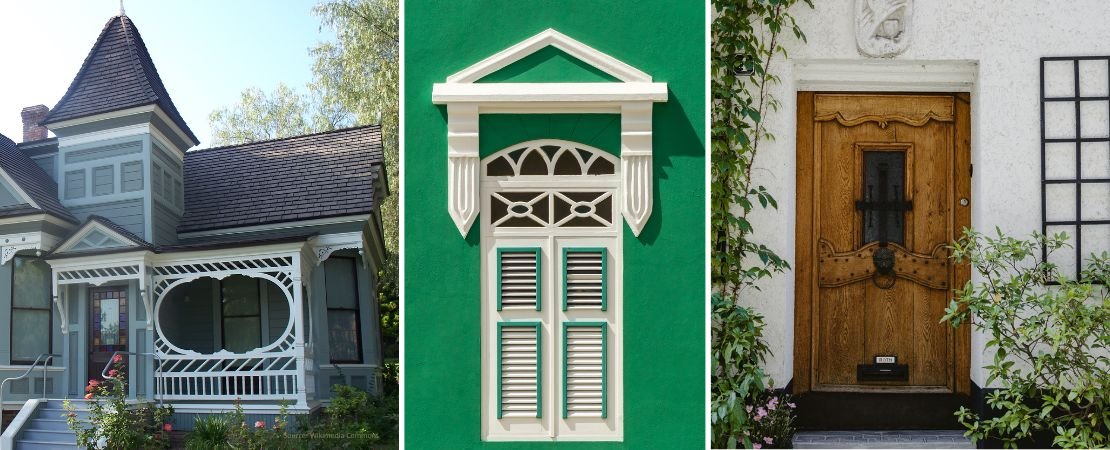
Eastlake Architecture: Clean Lines with Character
Architecturally, Eastlake homes still fall under the Victorian umbrella but lean toward simpler trim work, flatter surfaces, and more geometric patterns in the ornamentation. You’ll often see Eastlake-style detailing on Queen Anne homes, especially on porch railings, gable brackets, and interior fretwork.
Look for:
- Spindle work and flat sawn balusters
- Linear or incised woodwork instead of scroll-carved details
- Repeating patterns — sunbursts, fans, and stylized plant forms
Eastlake door and cabinet hardware, in particular, became iconic: think bold backplates with crisp engravings, cast iron bin pulls, and knobs with symmetrical floral or geometric designs.
How to Use Victorian and Eastlake Style in Your Home
If you're restoring a period home or adding vintage character to a newer space, you can use elements from both styles — just keep their differences in mind.
When to Use Victorian Style:
- If you're restoring a home built before 1900 with original ornate millwork
- When you want a maximalist, richly decorated interior with historical accuracy
- For traditional-style interiors with antique furniture and classic finishes
Try this: Add decorative brass address plates, embossed push plates, or a glass knob set with floral rosettes.
When to Use Eastlake Style:
- If you prefer a more restrained, architectural look with natural finishes
- When working in Craftsman, Folk Victorian, or transitional spaces
- If you love vintage design but want something less fussy than high Victorian
Try this: Choose cast brass bin pulls with incised Eastlake motifs, cabinet knobs with sunburst or geometric designs, or wooden backplates with stylized details.
Bringing It Together
Rich in detail and rooted in tradition, Victorian and Eastlake styles remain as relevant and admired today as they were in their own time. It just depends on the level of ornamentation you’re drawn to. Victorian design embraces rich detail and visual drama, while Eastlake takes a more structured and purposeful approach, rooted in craftsmanship and simplicity.
At Van Dyke’s Restorers, we carry a wide selection of hardware, wooden home accents, and decorative elements that reflect both of these historic styles. So, whether you're restoring a Queen Anne or just want to add Eastlake flair to your kitchen cabinetry, we've got you covered.